
The Technology Behind a Natural-Looking Smile: How Modern Dental Implants Combine Biology, Design and Digital Precision

A truly natural-looking smile is not created by technology alone. It emerges when technology knows how to work with biology, when design respects the proportions of the face, and when precision becomes almost invisible in the finished result. This is the philosophy reshaping modern dental implants: replacing missing teeth is no longer simply about filling a gap, but about recreating a functional and visually harmonious part of the mouth.
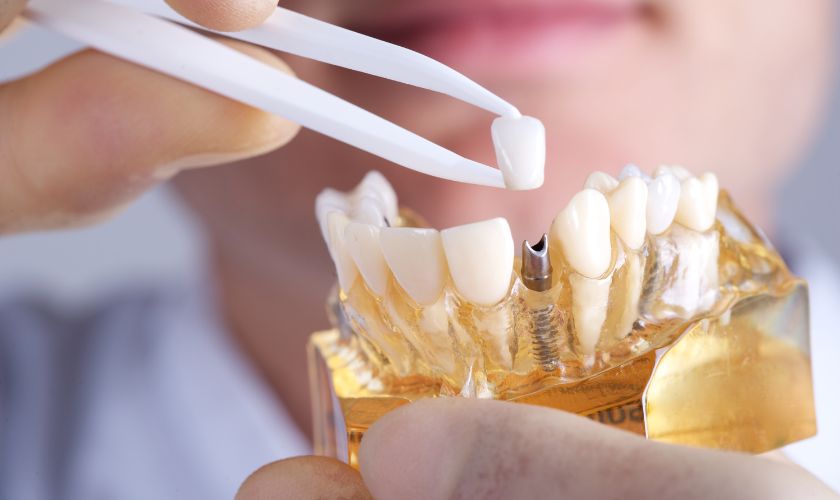
Dental implants have become one of the most sophisticated solutions for replacing missing teeth because they address more than the visible crown. Unlike conventional tooth replacement options that rest on or attach to existing structures, an implant is surgically positioned within the jawbone, where it can integrate with surrounding bone through a biological process known as osseointegration. This relationship between implant and bone provides a stable foundation for the replacement tooth.
Yet biology is only one part of the story.
Where Biology Meets Engineering
A successful dental implant depends on the remarkable ability of bone to interact with a carefully engineered implant surface. Most conventional implants are manufactured from biocompatible materials such as titanium, selected for their strength, durability and compatibility with human tissue.
Over time, the surrounding bone can form a close structural relationship with the implant. This creates the foundation for chewing forces to be transferred through the implant system in a way that is fundamentally different from a removable denture.
But the biological environment is not identical for every patient. Bone volume, density, gum condition, bite forces and the location of the missing tooth all influence treatment planning. Modern implant dentistry therefore begins with understanding the individual rather than simply selecting a standard component.
This is where digital technology becomes transformative.
The Digital Blueprint of a Smile
Modern dental imaging can provide clinicians with detailed information about the teeth, jawbone and surrounding anatomical structures. Three-dimensional imaging, including cone beam computed tomography (CBCT), can help dentists assess bone dimensions and identify important anatomical landmarks before implant placement.
Digital impressions add another layer of information. Instead of relying exclusively on traditional physical impressions, intraoral scanners can capture highly detailed digital representations of the mouth. These digital records can then be integrated into computer-aided design and planning workflows.
The result is something resembling a digital blueprint.
A dentist can evaluate where an implant should ideally be positioned, how the proposed restoration will relate to neighbouring teeth, and how the final tooth should emerge from the gum. In appropriate cases, digitally planned surgical guides can help translate the virtual plan into the clinical environment.
The objective is not technology for technology’s sake. It is predictability.
Designing the Tooth Beyond the Tooth
A replacement tooth should not look like an isolated object placed into the mouth. It needs to belong there.
This requires attention to details that extend beyond tooth colour. Dentists and dental technicians consider the relationship between tooth width and height, the contours of the gum, the position of adjacent teeth, facial proportions and the patient’s natural smile.
Digital smile planning and CAD/CAM technologies can assist in designing restorations with remarkable precision. The crown can be shaped according to the surrounding dental architecture, while modern ceramic materials can reproduce aspects of natural enamel, including translucency and light reflection.
This is particularly important in the visible front teeth, where even subtle differences in shape or position can become noticeable.
The best implant restoration therefore often has a paradoxical quality: sophisticated engineering produces an outcome that looks completely ordinary.
When More Than One Tooth Is Missing
Replacing several missing teeth introduces another level of complexity. The challenge is no longer simply to reproduce individual teeth, but to create a coordinated system that works together.
A multiple tooth implant may be used in carefully selected cases to support several individual crowns or a fixed implant-supported bridge. Treatment planning becomes especially important because implant positions need to work with the proposed restorations, available bone and forces generated during chewing.
Digital planning can help clinicians visualise these relationships before treatment begins. It can also improve communication between dentist, technician and patient by providing a shared representation of the proposed result.
This collaborative process is one of the defining characteristics of contemporary implant dentistry. The implant surgeon, restorative dentist and dental laboratory are no longer working from isolated pieces of information. Digital workflows allow them to work from a common treatment concept.
Precision Should Serve the Human Smile
There is a temptation to think that greater digital precision automatically means a better result. In reality, precision is valuable only when it serves biology, function and aesthetics.
A perfectly measured implant placed without regard for soft tissue can still produce an unsatisfactory aesthetic outcome. A beautifully designed crown cannot compensate for poor oral hygiene or uncontrolled gum disease. And sophisticated imaging does not remove the need for clinical judgement.
Technology provides information. Dentists interpret it.
That distinction matters because every patient brings a different anatomy, history, bite and expectation. The most advanced implant treatment is therefore not necessarily the one with the most equipment, but the one in which technology is intelligently integrated into a personalised clinical strategy.
The Future Is Becoming More Invisible
The evolution of implant dentistry is moving towards increasingly integrated digital workflows. Three-dimensional imaging, digital impressions, computer-assisted planning, CAD/CAM manufacturing and increasingly sophisticated restorative materials are helping clinicians move from reactive tooth replacement towards carefully orchestrated reconstruction.
The deeper achievement is not that a dentist can now design an implant restoration on a screen. It is that biological science, engineering and digital design can cooperate to make the finished restoration feel like it was always meant to be there.
That is perhaps the true measure of modern dental technology: not how visible the technology becomes, but how naturally it disappears into the result.
As dentistry continues to evolve, this balance between human anatomy and digital precision will remain the cornerstone of modern dental practices—helping clinicians create restorations that are designed not merely to replace what has been lost, but to restore confidence, function and the quiet authenticity of a natural-looking smile.

Comments are closed.